In the heart of the Historic Center, a group of Mi Valedor members gathered at Fundación Herdez to share much more than recipes: life stories, culinary knowledge, and the joy of building community around the kitchen.
The history of Herdez dates back to 1914, marking the beginning of what would become one of Mexico’s most recognized food companies. Through Fundación Herdez, the organization has spent decades promoting food education, preserving culinary traditions, and offering cooking workshops that connect people from diverse backgrounds with the flavors, techniques, and knowledge that make up Mexico’s rich gastronomic heritage.

Beyond teaching culinary techniques, these workshops seek to preserve Mexico’s culinary memory and recognize the cultural value embedded in every recipe. Through ingredients, cooking methods, and traditions passed down from generation to generation, Fundación Herdez works to preserve culinary heritage while bringing visibility to the stories that are woven around food. It is a vision that resonates deeply with Mi Valedor, where the kitchen also becomes a space for sharing experiences, strengthening relationships, and recognizing the knowledge that each person carries with them.

This time, the workshop brought together three Valedores well known for their enthusiasm and commitment to cooking: Doña Emi, Bigotes, and Francisco. It was not their first time taking part in one of these experiences. In fact, this marked the third visit by members of Mi Valedor to Fundación Herdez. During previous workshops, they prepared salsa macha for a birthday celebration, learned how to make corn tortillas and tlacoyos, and took part in sessions dedicated to salsa verde and other traditional Mexican dishes.

The workshop was dedicated to preparing a variety of salsas, including a traditional red salsa and a refreshing pineapple salsa that quickly became one of the group’s favorites. From the very beginning, the kitchen became a warm, lively space filled with movement, rich aromas, and conversation. While cheers, applause, and celebrations from the World Cup match screening in Mexico City’s Zócalo echoed outside, participants remained focused on the ingredients, the cooking techniques, and the exchange of stories and experiences inside the workshop.

As is often the case at Fundación Herdez workshops, the kitchen also became a place for sharing personal stories. The Valedores spoke about where they come from, the people who taught them how to cook, and the family memories woven into each recipe.
Doña Emi took charge of roasting the pineapple, bringing both patience and experience to the task. Her story is deeply connected to the kitchen: from an early age, she cared for her younger siblings and found in cooking a way to support and care for her family. Originally from Texcoco, she also enjoys connecting with the people she meets on the streets of Mexico City. She loves having her picture taken, chatting with international visitors, and running into people who recognize her work—whether to say hello or ask her to sign one of her fanzines.

Meanwhile, Francisco was fine-tuning a chicharrón-based salsa, clarifying questions and experimenting with different ingredients along the way. His story is also one of perseverance. He spent ten years experiencing homelessness, traveling across different states in Mexico while selling newspapers. “I could carry up to a thousand copies in my backpack,” he recalls. Today, he has been part of Mi Valedor for a decade and continues expanding his knowledge through different culinary courses.
Among the lessons he shares, one philosophy stands out as a guiding principle in his life: enjoy the process so you can later appreciate the achievement. For him, goals are never final; there is always a new possibility waiting to be pursued. “There are no limits,” he often says, while never losing sight of the importance of preserving one’s own essence throughout the journey.

Bigotes, who regularly prepares meals at the Mi Valedor house, also brought his experience and enthusiasm to the workshop. His passion for cooking has made him a frequent participant in these activities, where he continues discovering new tools and techniques to further develop his culinary skills.

At the end of the session, chef Montserrat Castillejo shared several tips to improve their preparations and highlighted one of the most important lessons in cooking: even when everyone uses the same ingredients and follows the same process, no two salsas will ever taste exactly the same. Each preparation carries the experience, sensitivity, and personal story of the person who makes it.
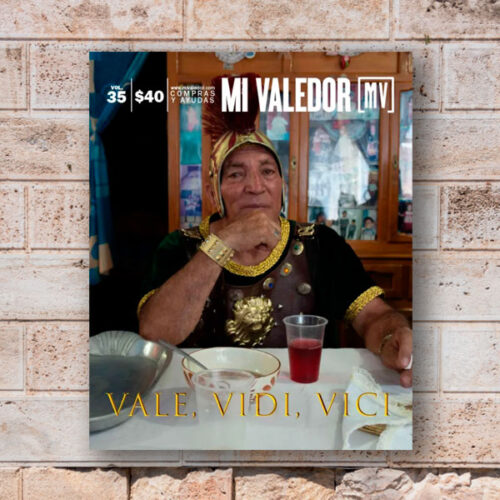
Proud of their work, the Valedores arrived prepared with containers to take their creations home and share them with family and friends. During the workshop, they also reflected on the launch of issue of the magazine #36, Jijos del Maíz!, a publication that celebrates the cultural, historical, and gastronomic richness surrounding one of the key ingredients at the heart of Mexican identity.

The collaboration between Fundación Herdez and Mi Valedor continues to create new learning opportunities for the members of the project. As part of this ongoing commitment, Fundación Herdez also provided a donation to support Valedores interested in strengthening their culinary training and continuing to build on the knowledge gained through the different workshops. This support reaffirms a shared commitment to community learning, the reclaiming of traditional knowledge, and the recognition of cooking as a tool for personal and collective growth.

The culinary journey will continue soon with a new workshop dedicated to traditional atoles. The program will include savory preparations such as red chileatole, green chileatole, and milpa-style chileatole, as well as sweet corn-based versions with mango, apple and cinnamon, and peanut with cocoa, served with animal-shaped cookies.
At Mi Valedor, we extend our deepest gratitude to Fundación Herdez for opening its doors, sharing its knowledge, and continuing to create spaces where cooking becomes a tool for learning, connection, and community building. Thank you for your continued invitations and for once again supporting gatherings that strengthen bonds between people through food, culture, and solidarity.
Because behind every salsa, tortilla, or atole, there is a story that deserves to be told, preserved, and shared. Through this act of collective memory, gastronomy also becomes a form of identity, resistance, and community.


Mi Valedor took part in the Pride edition of the Espacio Fotográfico Bazaar, a cultural and artistic gathering held at Casa Refugio Citlaltépetl. Throughout the weekend, the team shared the space with a wide range of independent artists and visual projects, reinforcing the organization’s presence at events that celebrate diversity, foster inclusion, and strengthen community connections.

On June 23, the Mi Valedor team took part in a special guided tour at the Museum of Modern Art. As they explored the galleries, the group had the opportunity to discover one of the most significant private collections of Mexican art from the twentieth century, while sharing an enriching experience of learning and community.

Music, art, and diversity came together on June 5 during a fundraising evening in support of Manos Amigues LGBTQ+ Community Center. The event brought together artists, community organizations, and attendees in a celebration dedicated to strengthening safe spaces and supporting grassroots initiatives that promote inclusion and provide care and support sexual and gender diversity.

Mi Valedor took part in the Pride edition of the Espacio Fotográfico Bazaar, a cultural and artistic gathering held at Casa Refugio Citlaltépetl. Throughout the weekend, the team shared the space with a wide range of independent artists and visual projects, reinforcing the organization’s presence at events that celebrate diversity, foster inclusion, and strengthen community connections.
On June 23, the Mi Valedor team took part in a special guided tour at the Museum of Modern Art. As they explored the galleries, the group had the opportunity to discover one of the most significant private collections of Mexican art from the twentieth century, while sharing an enriching experience of learning and community.
Music, art, and diversity came together on June 5 during a fundraising evening in support of Manos Amigues LGBTQ+ Community Center. The event brought together artists, community organizations, and attendees in a celebration dedicated to strengthening safe spaces and supporting grassroots initiatives that promote inclusion and provide care and support sexual and gender diversity.